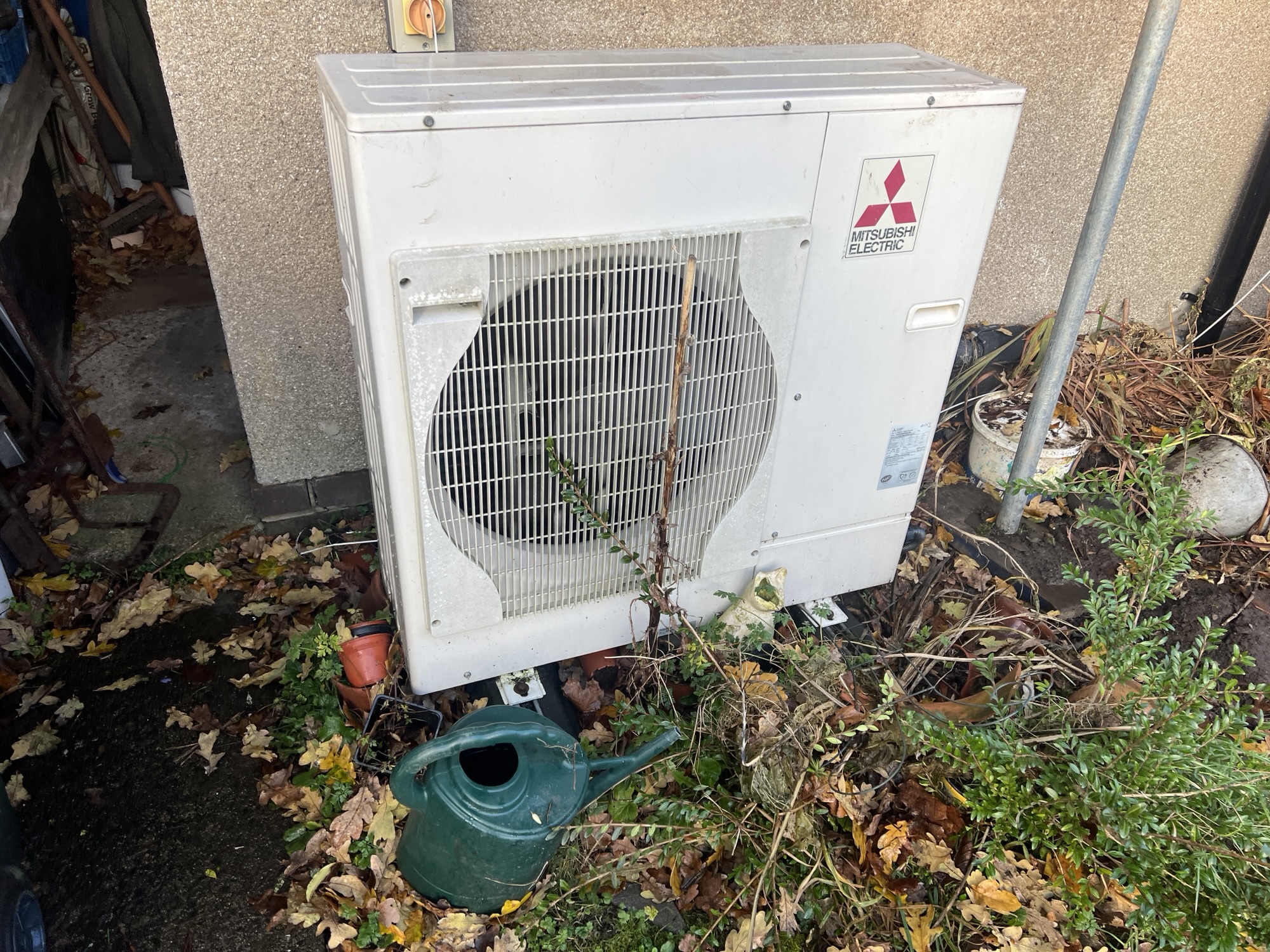
Air source is has been around for over a decade. They’ve only been getting more common in the last 5 years and are only going to get more common. They are more complicated to set up and air source works in a different way to gas or oil boilers. Here are the top 5 most asked questions about air source heat pumps.

1. “Will it actually keep my house warm in the winter?”
This is the #1 concern. People worry that because ASHPs run at lower “flow temperatures” (typically 35°C–45°C) than gas boilers (70°C+), they won’t handle a deep freeze.
- The Answer: Yes. Modern units are designed to work effectively even when outdoor temperatures drop to -15°C or lower.
- The Caveat: Because the heat is “gentle,” you can’t just blast it for an hour in the morning. Heat pumps work best when left on at a consistent, lower level to maintain an ambient temperature.
2. “How much space do I need?”
Many homeowners are surprised to find that a heat pump requires both indoor and outdoor space.
- Outside: You need a clear area for the “fan unit” (roughly the size of a moped or a large washing machine). It needs about 1 meter of clearance in front and to the sides to allow for proper airflow.
- Inside: Unless you get a “hybrid” system, you will likely need space for a hot water cylinder (about the size of a tall fridge-freezer), as heat pumps don’t provide “instant” hot water like a combi-boiler.
3. “Are they noisy? Will my neighbors complain?”
- The Reality: In 2026, technology has made heat pumps remarkably quiet. Most modern units operate at 40–55 decibels, which is comparable to the hum of a refrigerator or a quiet conversation.
- Planning: In the UK, you typically don’t need planning permission (under “Permitted Development”) as long as the unit meets certain noise standards and is a certain distance from your neighbor’s window.
4. “Do I have to replace all my radiators?”
This is a major cost consideration.
- The Assessment: Because the water is cooler, you need more surface area to heat a room. This often means upgrading to larger, double-panel radiators or installing underfloor heating.
- The Good News: You don’t always have to replace every radiator. An installer will perform a “heat loss calculation” to see which specific rooms need more power.
5. “Is it cheaper to run than a gas boiler?”
This depends heavily on electricity vs. gas prices.
- Efficiency: A heat pump is roughly 300%–400% efficient (for every 1kW of electricity, you get 3-4kW of heat). A gas boiler is only about 90% efficient.
- The Math: Because electricity is currently more expensive per unit than gas, the running costs are often roughly equal for many homes. You see the biggest savings if you are replacing an old oil, LPG, or electric storage heater system.
Quick Comparison: ASHP vs. Gas Boiler (2026)
| Feature | Air Source Heat Pump | Modern Gas Boiler |
| Efficiency | 300% – 400% | ~92% |
| Carbon Emissions | Very low (Zero if on a green tariff) | High (Burning fossil fuels) |
| Lifespan | 20 – 25 years | 10 – 15 years |
| Upfront Cost | High (£8k–£15k before grants) | Low (£2k–£4k) |
| Maintenance | Annual check (low intensity) | Annual service (safety critical) |
If you found this confusing:
If you found this confusing. Please let us know in the comments section so we can clear things up for you. We love feedback and we are trying to make the best possible website. If you don’t understand then others don’t as well.
If you found this useful:
If you found this useful maybe check some of our other pages.